A 2009 warning about right-wing extremism was engulfed by politics. There are signs it’s happening again.
[ad_1]
Editor’s note, June 9, 2022: USA TODAY is republishing this story from Jan. 25, 2021, due to the hearings scheduled for this week by the House committee probing the attack on the U.S. Capitol. The story has been lightly updated to reflect changes in the number of individuals charged and how many are current or former military veterans.
In April 2009, federal intelligence officials issued a prescient warning to police departments around the country.
“Right-wing extremists will attempt to recruit and radicalize returning veterans in order to exploit their skills and knowledge derived from military training and combat,” experts in the Department of Homeland Security wrote. “These skills and knowledge have the potential to boost the capabilities of extremists – including lone wolves or small terrorist cells – to carry out violence.”
It was one of DHS’ most explicit mentions of homegrown terrorists since 9/11, one with a direct connection to the military.
But the call to action was effectively buried after powerful Republican politicians and their allies in the right-wing media launched broadsides against President Barack Obama’s administration and Democrats, alleging that they had disrespected the men and women in the U.S. military while attempting to surveil and silence conservatives. The blowback shifted the debate away from how to actually address the threat and into another partisan public spectacle.
While the federal government, including the FBI, continued gathering intelligence, the episode turned the topic of right-wing extremism into political poison, according to former senior officials at the Department of Homeland Security, hobbling any serious public discussion about how to deal with this emerging threat. The officials said the agency disbanded the unit that wrote the report and failed to adequately focus on white supremacy and domestic terrorism for years afterward.
During Donald Trump’s tenure as president, his rhetoric and refusal to clearly denounce white supremacists and other hate groups only encouraged what the analysts had warned about 12 years ago, experts say. Then, in one of his final acts in office, Trump repeatedly claimed that the election had been stolen from him, and thousands of supporters marched on the Capitol to prevent the results from being certified. Five people died in the ensuing riot, including a police officer.
It was an embarrassment for federal intelligence officials who failed to prevent violence that had been telegraphed online for months ahead of time. The aftermath has brought renewed national attention to the threat of right-wing extremism and crystallized the warnings in DHS’ 2009 intelligence report – including the explicit concerns about veterans.
At least 76 current or former members of the military are among the more than 820 individuals charged in connection to the Capitol riot, including 30 Marines and 25 Army veterans, according to a USA TODAY examination of court filings, news reports and other public records. Several have also been accused of being part of extremist groups, including a Navy veteran and supposed leader of the Oath Keepers, a far-right, anti-government paramilitary organization, who prosecutors say coordinated a group that attacked the Capitol.
President Joe Biden – who has said he decided to run for president after the deadly white supremacist rally in Charlottesville, Virginia, in 2017 – vowed in his inaugural address to crack down on white supremacists. And last week he ordered law enforcement and intelligence officials, including those at DHS, to investigate the risk of domestic terrorism.
But his administration is already facing backlash that echoes the criticism from 2009, once again coming from Republicans and some of their supporters in the media.
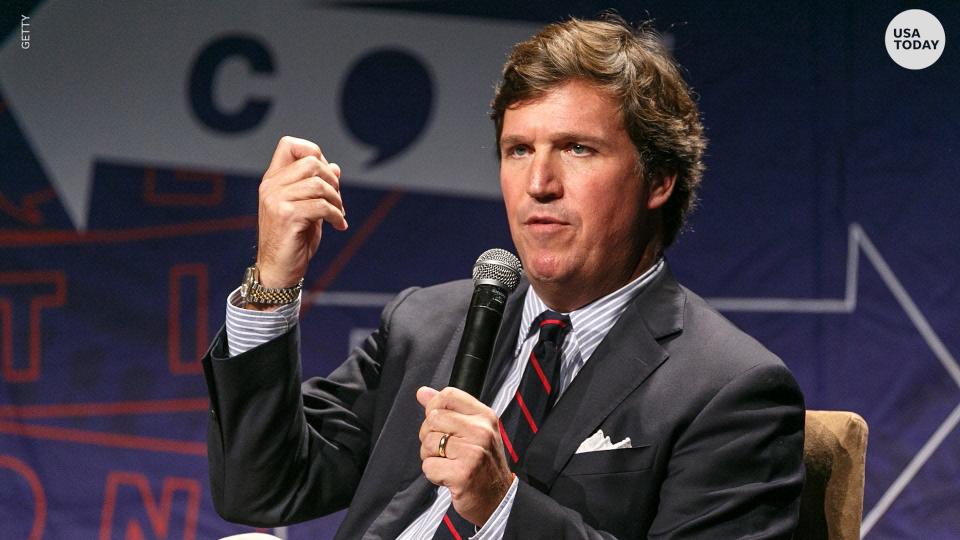
“They’re using what happened last week to justify the most sweeping crackdown on civil liberties and free speech in the history of this country,” Tucker Carlson told Fox viewers after the riot.
Sen. Rand Paul, R-Ky., called Biden’s speech “thinly veiled innuendo” targeting Republicans. “Calling us white supremacists, calling us racists, calling us every name in the book,” he said on Fox News in a different segment last week.
Texas Gov. Greg Abbott said he found it offensive that the Defense Department felt the need to conduct extra background checks for National Guardsmen deployed to Biden’s inauguration. “No one should ever question the loyalty of the Texas National Guard,” he tweeted. The next day, Pentagon officials announced that the review found 12 people who needed to be removed from the detail, including two who allegedly had made extremist statements.
USA TODAY interviewed two dozen domestic terrorism experts, lawmakers, veterans advocates and current and former DHS officials to examine the repercussions of the political theater that overshadowed the 2009 intelligence report and whether the partisan sniping left the federal government ill-equipped to adequately reckon with the dangerous nexus of domestic terrorism, white supremacy and the military.
Mark Potok, a senior fellow at the Centre for Analysis of the Radical Right, said politicians’ incredulous response 12 years ago to what he and other experts knew to be “patently, undeniably true” about right-wing extremism helped set the tone for the past two administrations.
“Their capability to seriously monitor the domestic extreme right has been wiped out by their own stupidity and political cowardice,” Potok said. Instead, he added, it “became a manufactured controversy” over Obama and the Democrats disrespecting the troops.
Sean Smith, the former assistant secretary for public affairs for then-Homeland Security Secretary Janet Napolitano, called the reaction at the time “part of a deliberate attempt to create pseudo-scandal.”
“The Republicans are better at it,” he told USA TODAY. “They always have been better at it.”
Some lawmakers called for Napolitano to resign. “Mr. President, fire that woman,” Rep. John Carter, R-Texas, said during a congressional hearing.
Seventeen Republicans wrote a resolution compelling her agency to explain how it reached its conclusions about right-wing extremism. An anti-abortion nonprofit – which was known for flying banners of aborted fetuses next to Obama’s face – sued the DHS chief, accusing her of infringing on free speech.
In the end, the threats amounted to little more than grandstanding. Two judges tossed out the lawsuit. The resolution never passed. And Napolitano did not resign. She said she never even spoke with Obama about the report.

In an interview with USA TODAY, Napolitano maintained that some of the criticism against her agency at the time was legitimate, and she weathered it as best she could. She and her former staff said the federal government never dropped its commitment to domestic terrorism, adding that that the entire episode pales in comparison to the events of the past four years, which have amplified the threat dramatically.
An October study by the Center for Strategic & International Studies found that two-thirds of the terrorist plots and attacks in the United States in the first eight months of 2020 were carried out by white supremacists and like-minded extremists. Experts say the violence intensified throughout the Trump administration, in part because right-wing extremists felt emboldened by his rhetoric.
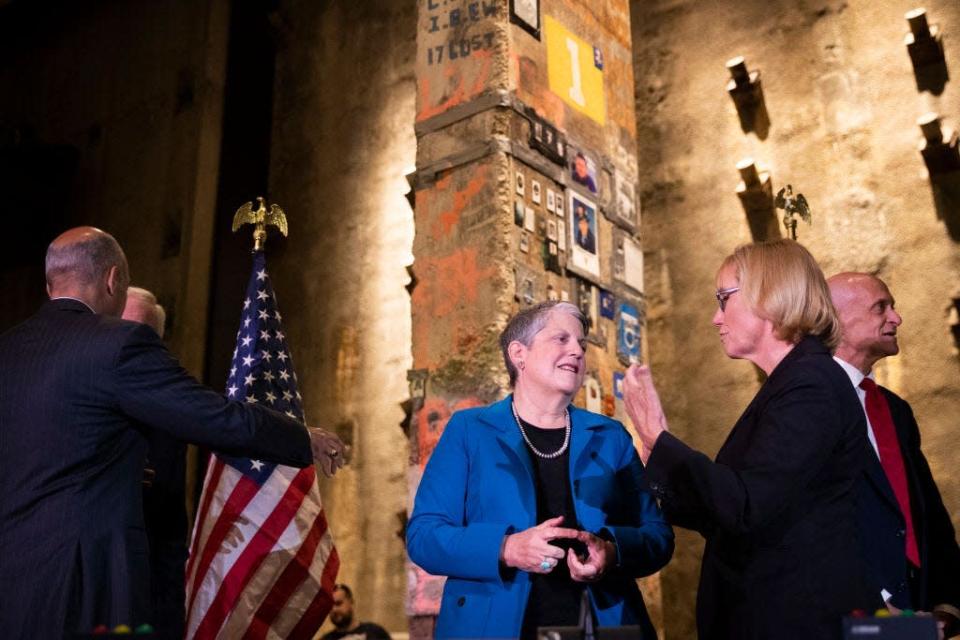
“DHS needs to take a hard look at itself and how it educates members of our military and what is the reach of extremism,” said Napolitano, who became president of the University of California and published a book on homeland security after leaving the agency in 2013. “I think people now have a deeper and greater appreciation for what the report was warning about.”
But the public pressure campaign – built largely on dubious interpretations of the memo rather than the language itself – worked. Napolitano apologized, DHS retracted the report, and the analysts who had spent months researching domestic extremism were reassigned.
Napolitano declined to discuss whether she stands by the decision to back away from the report. “I’m not going to answer that question,” she said. “I’m not here to debate what I did 12 years ago.”
Daryl Johnson, the former DHS analyst who wrote the report, condemned the GOP’s rhetoric and Napolitano’s response, calling the affair a missed opportunity to raise awareness about radical white supremacist groups looking to recruit military veterans.
“For one of the few times in recent American history, we had accurately predicted a threat, given ample warning and people just ended up bickering and fighting about it and the message got lost,” Johnson, who said he is a lifelong registered Republican, told USA TODAY. “We’ve suffered the consequences of that.”
By the time Trump took office in 2016, far-right extremists were committing more violent attacks and killing more people every year than any other terror groups in the U.S. High-profile attacks – including at a Sikh temple in Wisconsin, a Black church in South Carolina, a synagogue in Pennsylvania – resulted in the murders of dozens of people in the past decade.
Despite the trend of surging right-wing violence, Elizabeth Neumann, a former DHS deputy chief of staff during the Trump administration, told USA TODAY that the dispute over the 2009 intelligence report produced a “chilling effect” that hindered Homeland Security’s ability to share information about domestic terrorism with local law enforcement – one of the agency’s most important jobs.
“You would assume that we had that kind of analytical knowledge in the federal government,” Neumann said. “But I discovered very quickly that we just didn’t, and one of the reasons we didn’t was what happened in 2009.”
In a statement to USA TODAY, Matt Leas, acting press secretary at DHS, said the agency retracted Johnson’s report because it did not meet “tradecraft standards and was not well sourced.”
He said that the unit was not dissolved but moved as part of agency restructuring and that domestic terrorism remained important to DHS’ intelligence division, one of only two agencies with the legal authority to address domestic terrorism.
“Today, we face a heightened threat from domestic violent extremists,” Leas said. “The threat of terrorism in the Homeland, both foreign and domestic, has and will remain a high priority.”
The majority of the politicians who said they were incensed by the intelligence report in 2009 seemed to have no desire to revisit the topic when contacted recently by USA TODAY.
Then-House Minority Leader John Boehner, R-Ohio, had publicly called for Napolitano to explain “why she has abandoned using the term ‘terrorist’ to describe those, such as al Qaeda, who are plotting overseas to kill innocent Americans, while her own Department is using the same term to describe American citizens who disagree with the direction Washington Democrats are taking our nation.”
In a recent phone call, Boehner told USA TODAY that he did not recall the controversy or his comments 12 years ago. “Nope,” he said, “I think I’ll pass.”
‘She is watching you’
Few if any officials at Homeland Security were expecting their April 2009 intelligence bulletin – by nature apolitical – to make headlines.
Johnson was driving around suburban West Virginia delivering mulch from his Boy Scout troop for a fundraiser one sunny weekend when he heard on a radio news program that a DHS terrorism memo had become public. “I was like, ‘Are they talking about what I just wrote?’” he recalled.
That Monday, he went to the office and it seemed as if every colleague was on the phone with an angry civilian while his supervisors were fending off congressional staffers looking for answers. “It was just chaos,” Johnson said.
Homeland Security, which now has 240,000 employees and a $50 billion annual budget, was created in the wake of 9/11 to help law enforcement identify and respond to threats. Johnson’s report marked a notable shift from the foreign threats, such as al-Qaida, that had been the agency’s focus.
Napolitano and her staff were traveling out of state when staffers in Washington called to say there was a media firestorm over the leaked report.
“SHE IS WATCHING YOU,” read the headline at the top of conservative news aggregator Drudge Report, with a picture of Napolitano.
Rush Limbaugh told his listeners, “This Department of Homeland Security report is nothing more than a partisan hit job filled with lies and innuendo that portrays any conservatism as right-wing extremism.”
On “Fox and Friends,” a retired Army colonel said Napolitano should be fired “for her bigoted attitudes toward our military veterans.”

Kristofer Goldsmith, a former soldier and the founder of High Ground Veterans Advocacy, said it was another example of conservative media being used to weaponize patriotism and launder partisan talking points.
“What Republicans wanted to do was paint Democrats as unpatriotic, and they succeeded,” he told USA TODAY. “They suppressed the report. They convinced people through their propaganda outlets like Fox News that Democrats are unpatriotic.”
“That’s why it’s so easy for these right-wing people to recruit today,” Goldsmith added. “They’ve been inundated with this idea.”
Limbaugh and Matt Drudge did not respond to requests for comment. In a statement to USA TODAY, Fox News spokeswoman Irena Briganti disputed the news outlet’s role.
“To use the media as a scapegoat for the failures of government is not only disingenuous, it is dangerous,” she said. “As a news organization, it is our job to hold the government accountable.”
The news reports came as more than 15 politicians put pressure on Napolitano, many mischaracterizing Johnson’s conclusions as a sweeping condemnation of veterans. Some demanded that she apologize and withdraw the report. Nearly all of the outrage came from Republicans, with at least two exceptions – Democrats Christopher Carney in Pennsylvania and Bennie Thompson in Mississippi.
Mike Pompeo, then a Republican congressman from Kansas who would become Trump’s CIA director and then secretary of state, said at the time that focusing on domestic terrorism was an exercise in “political correctness” that overlooked “the threat that radical Islamic terrorism poses,” according to a New York Times report. Pompeo did not respond to requests for comment.
Rep. Steve Buyer, a Republican from Indiana and ranking member on the House Veterans’ Affairs Committee, said it was “inconceivable” that the administration would consider military veterans a potential terror threat. Rep. Carter in Texas organized an hour of floor speeches to call for Napolitano’s ouster. Randy Pullen, then-chairman of the Republican Party in Arizona, where Napolitano had served as attorney general and governor, said she was “in way above her head.”
“She has little understanding of the security issues facing our country,” he said.
David Rehbein, then-national commander of the American Legion, a congressionally chartered veterans’ group that claimed 2.6 million members, wrote to Napolitano demanding she disavow the warnings about military veterans. He took offense to the report mentioning Timothy McVeigh, an Army veteran who killed 168 people in 1995 by blowing up a federal building in Oklahoma City. “To continue to use McVeigh as an example of the stereotypical ‘disgruntled military veteran,’” Rehbein wrote, “is as unfair as using Osama bin Laden as the sole example of Islam.”
Napolitano, who originally tried defending the report, began walking it back before ultimately deciding that some of the criticism had merit and it was best to give ground.
“The gist of the report was accurate, but because of some of the unfortunate categorical language, it had to be withdrawn,” Napolitano told USA TODAY. She and her aides maintained that the entire report was not completely rescinded but was edited to address the concerns about veterans. (Leas, the DHS spokesperson, told USA TODAY the report was in fact retracted.)
“Some verbiage made it seem that every military veteran was susceptible to being recruited and a right-wing extremist,” said Napolitano, who was the first woman to serve as secretary of DHS and held the job for longer than anyone else to date.
She said the pressure came from those with significant political capital. “The veterans groups have quite a bit of influence, and we all understand why. We all appreciate our veterans,” she added. “When they get upset, Washington, D.C., gets upset, and that’s what happened.”
Outside experts and watchdogs who had been pushing for the federal government to take domestic terrorism more seriously said the agency’s response to the controversy was a resounding blow.
“In a truly shameful moment, Napolitano caved,” said Potok, who was a senior fellow at the Southern Poverty Law Center at the time. “This has been an incredibly long-festering problem that administration after administration has failed to deal with despite repeated serious warnings.”
In the weeks that followed the initial outcry, Johnson said his intelligence unit, created during the George W. Bush administration, was dissolved, his colleagues reassigned to different divisions outside their domestic terrorism specialty.
“There were multiple fall guys on this,” he said. “My division director was ostracized, sent down to (U.S. Customs and Border Protection) to basically rot and be forgotten about.”
Napolitano and her former chief of staff, Noah Kroloff, said it was unfair to assign outsized significance to the episode by drawing lines straight to the Capitol Hill riot this month. They argued the unit was reorganized, not dissolved, and it wasn’t done in retaliation for the report. The fact that Johnson’s team no longer existed in the same form did not mean the agency took the threat of domestic terrorism any less seriously, they said, noting that other federal agencies specialize in tracking down terrorists.
“Without equivocation, the department in no way abrogated its responsibility to mitigate threats,” Kroloff told USA TODAY.
Neither Kroloff nor Napolitano could point to specific operations inside DHS that replaced the work lost when those in Johnson’s unit were reassigned. Kroloff cited Obama’s general plan to counter violent extremism. Some academics have criticized the plan for being vague and failing to adequately address white supremacy.
“It’s very hard to take the 2009 document and apply it to 2021,” Kroloff said, referring to Johnson’s report. “In 2009, you could not have foreseen that the subsequent leader of the free world would invite extremists to riot at the Capitol.”
The threats have changed, but critics defend their response
Even after years of right-wing violence, culminating most recently in the Capitol Hill riot, the few outspoken politicians who agreed to interviews stood by their 2009 criticism of DHS.
Pullen, then chairman of the Arizona Republican Party, said that he felt the report had focused on radicalization relating to one political party, rather than more broadly, and that the report “overstated” what was happening at the time. (Homeland Security had issued a similar report about the dangers of left-wing extremism weeks earlier.)
Former New York Rep. Peter King, then the top Republican on the House Committee on Homeland Security, was also skeptical of the report’s findings and said it seemed to be politically motivated. The fact that Napolitano rescinded it so quickly, and DHS didn’t renew the concerns with additional evidence, confirmed his beliefs, he said. King said he felt the threat of Islamic terrorism was far more pressing at the time and resources should not have been diverted to domestic terrorism.

“That doesn’t mean that it didn’t turn out, that as years went by, a threat did develop,” he said. “But that report itself didn’t didn’t show that. There was not enough evidence to show that, certainly to divert our attention from what we were doing at the time.”
Rep. Carney, one of the few Democrats to criticize the report in 2009, said he still thinks the memo unfairly suggested widespread “disenchantment and radicalization” among the military. At the time, he said it personally offended him as a veteran, along with constituents in his Republican-leaning district.
But Carney told USA TODAY he could not have anticipated then how social media and Trump’s rhetoric would change the political landscape in the years to come.
“I guess it has been borne out now in the last 10 years that some groups who have been affiliated with the military became increasingly radicalized,” said Carney, who left office in 2011. “My argument still, however, is that the vast, vast, vast majority of those who wore the cloth of our country have not become that way. In fact, have taken offense at what happened on January 6th.”
In a recent interview, Rehbein, the former American Legion national commander, also stood by his criticism, arguing that the government shouldn’t be profiling people based on their profession. Extremists could be found in any profession, he said.
“That report seemed to be painting with a very broad brush the military as far as right-wing extremism was concerned,” Rehbein said.
‘We didn’t have our eyes on the threat’
In 2015, then-U.S. Rep. Keith Ellison, D-Minnesota, wrote a letter asking President Obama and the DHS secretary to reopen Johnson’s unit, the Extremism and Radicalization Branch, and update the 2009 threat assessment. The letter, which was signed by 19 other Democratic members of Congress, warned that the government needed to do more to address “the threat of right-wing extremism.”
Ellison, who said he has no record of any response from the Obama administration, is now the Minnesota attorney general. He told USA TODAY last week that the letter foreshadowed what is happening now.
“When we decided as a society that we were going to just simply not address violent right-wing extremists, we simply allowed that movement to grow. We allowed that movement to flourish,” he said.

Throughout his tenure, Trump’s refusal to clearly denounce white supremacist and other hate groups, his vague proclamation of “both sides” being to blame for the deadly protest in Charlottesville, and his own jingoistic rhetoric only encouraged the domestic extremist groups Johnson and his team warned about back in 2009, experts said.
Ahmet Yayla, director for the Center for Homeland Security at DeSales University, said it became fashionable for young people to align with extremist beliefs because the president gave them tacit permission to do so.
“It became a catalyzer,” Yayla told USA TODAY. “We amped the radicalization process because there was a leader whom they could admire.”
In addition to his own words, Trump also implemented practical policy changes that baffled experts in domestic extremism. In 2017, the administration canceled millions of dollars in congressional “Countering Violence Extremism” grants to groups that fight domestic terrorism.
“I can say, unequivocally, when it comes to the issue of domestic terrorism, (Trump’s) White House was completely out to lunch,” said Miles Taylor, a Trump appointee who served as chief of staff to the former head of the Department of Homeland Security and who wrote anonymous critiques of the Trump administration. “That warped perspective essentially held back administration policy on the issue of domestic terrorism so significantly that I believe it has lost American lives.”
It all came to a head this month in Washington.
Ellison said seeing the Confederate flag and a rioter wearing a “Camp Auschwitz” sweatshirt in the halls of Congress made it clear to him that “this is a problem that could have been addressed earlier if society took it seriously.” He said someone needs to examine what had and had not been done in the wake of the 2009 report and determine what needs to be done moving forward to prevent something from happening again.
Carolyn Gallaher, a professor and senior associate dean at American University who has studied right-wing extremism in the United States, said DHS has been “fairly blind to domestic extremism since” the 2009 scandal.
“And look what happened,” she said. “The insurrection, it should be stunning and disheartening and anger-inducing for all of us. And it just demonstrates, we didn’t have our eyes on the threat, the domestic threat, that’s going on right in front of us.”
There is currently no specific law outlawing domestic terrorism. Some academics and former DHS officials said that in light of the wave of attacks in recent years, it may be appropriate to revisit the issue. Others, including civil rights groups, will likely challenge any such change on the First Amendment grounds that it would give broad powers to the government to surveil American citizens.
“I believe that if you do not investigate and surveil extremist ideology within the military and police and address it in society, there will be a next time,” Ellison said. “And the next time will be worse.”
Dinah Pulver contributed to this report.
This article originally appeared on USA TODAY: 12 years before the Capitol riot, a warning about extremism was buried
[ad_2]
Source link